
Anna Atkins
Cyanotypes
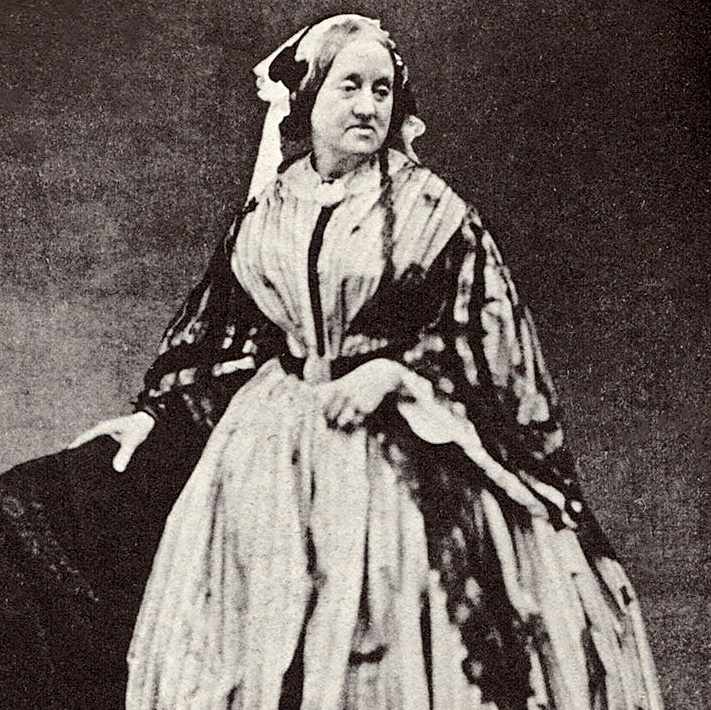
Anna Atkins
United Kingdom | 1799-1871
“The difficulty of accurately depicting
Anna Atkins
botanical specimens as tiny as filamentous
algae led me to this marvellous process
developed by Sir John Herschel called
the cyanotype. I can now capture images
of the plants themselves, and I am delighted
to offer them to my scientist friends.
Note written in 1843“
In this Festival dedicated to British photographers, we had no choice but to pay tribute to a pioneer. Although the French engineer Nicéphore Niépce is generally credited with inventing photography in 1824, Anna Atkins was the first woman to utilize this visual reproduction process. Born in 1799 during the reign of King George III, she was the daughter of a scientist at the British Museum and grew up in an environment where discussions centered on two key concepts : science and technological progress. It was a fertile environment for an inquisitive mind–something she certainly possessed.
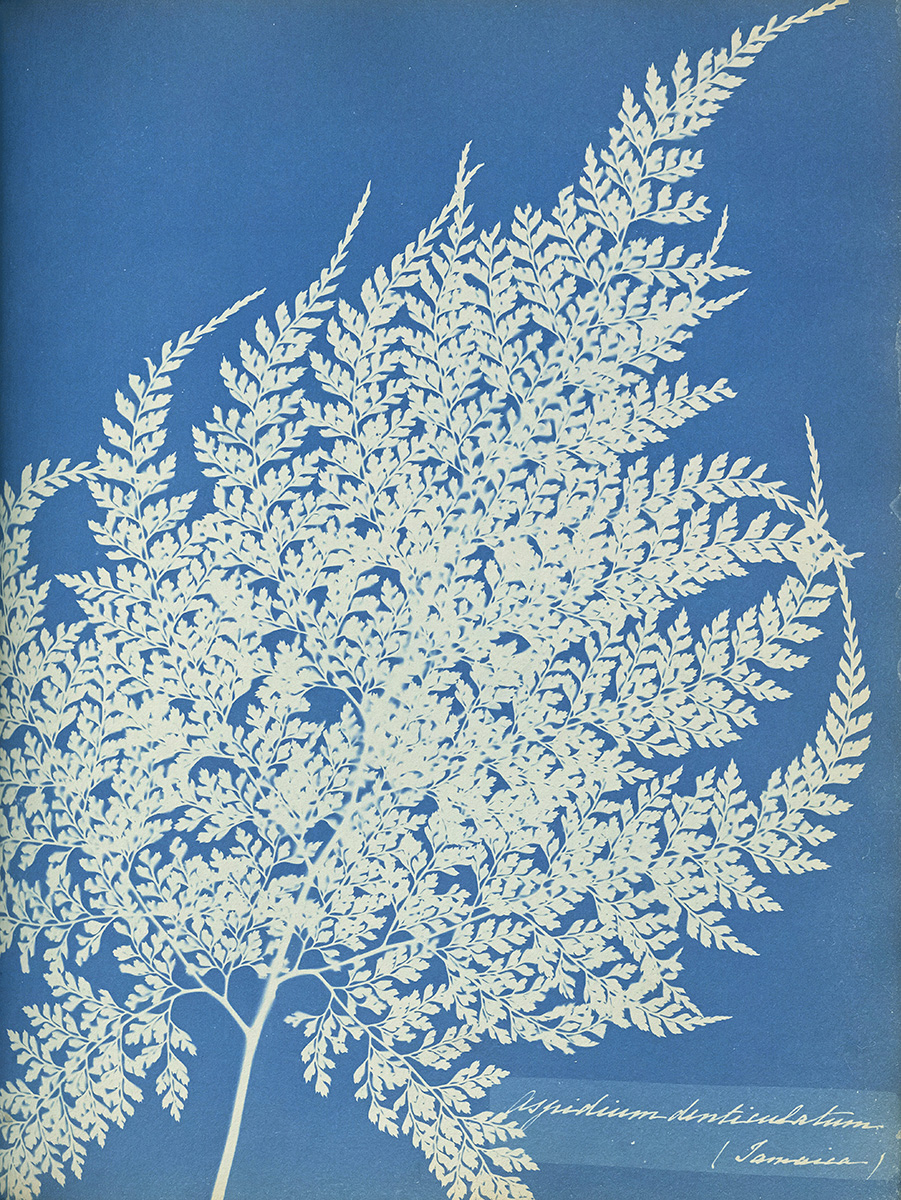
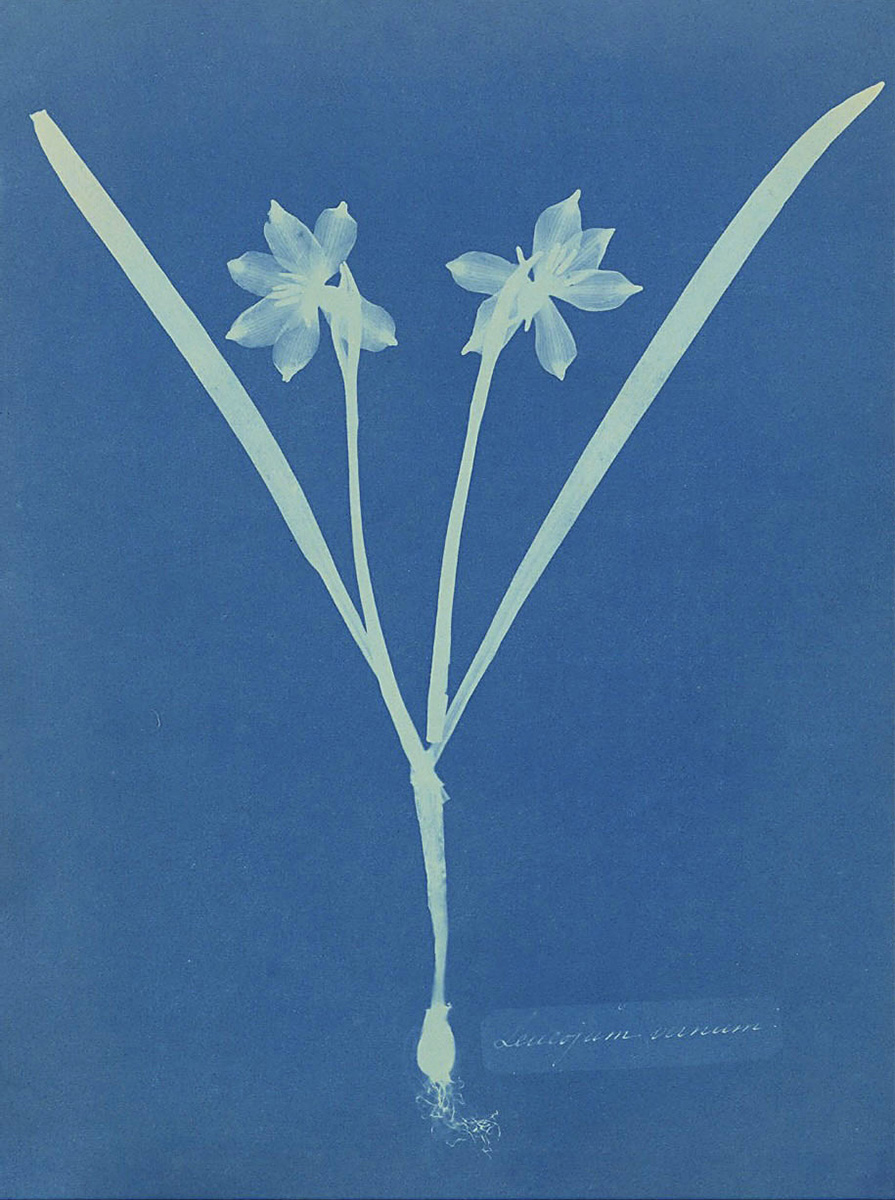
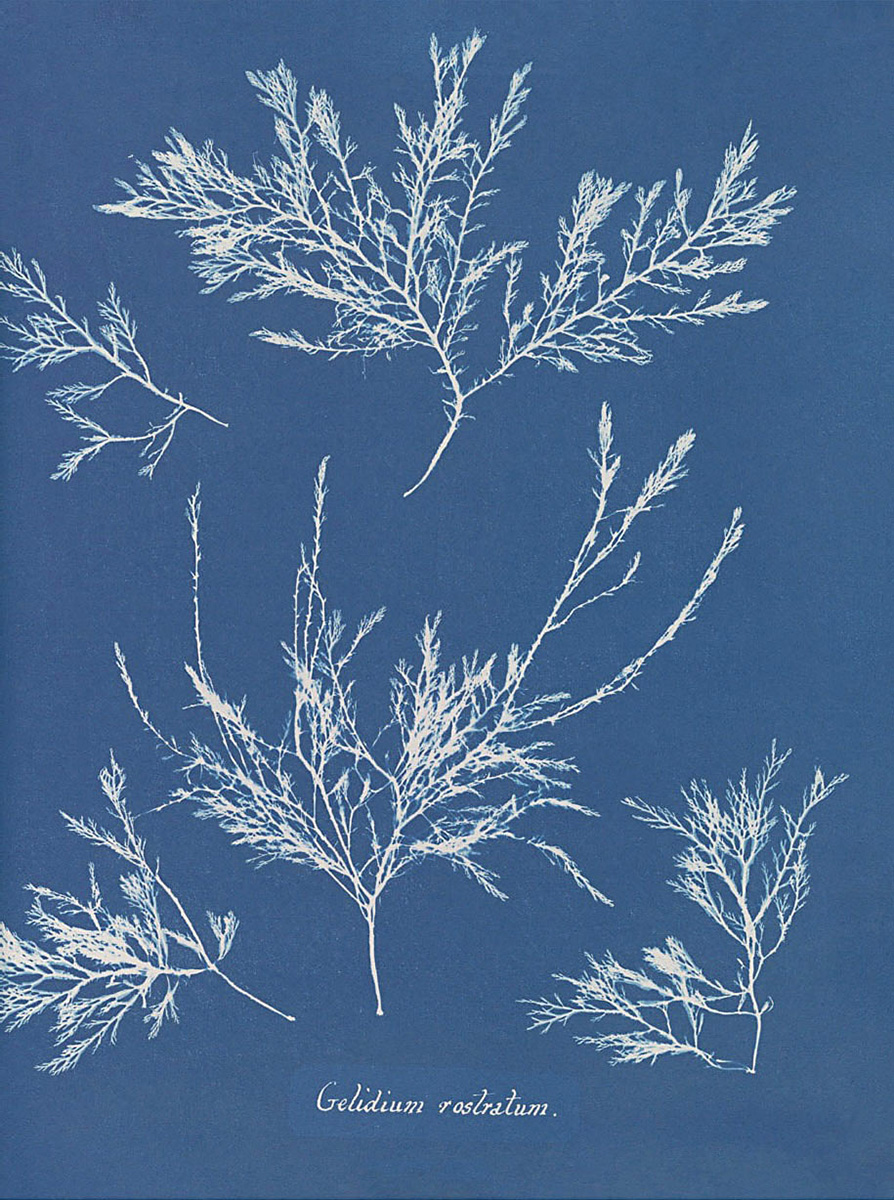
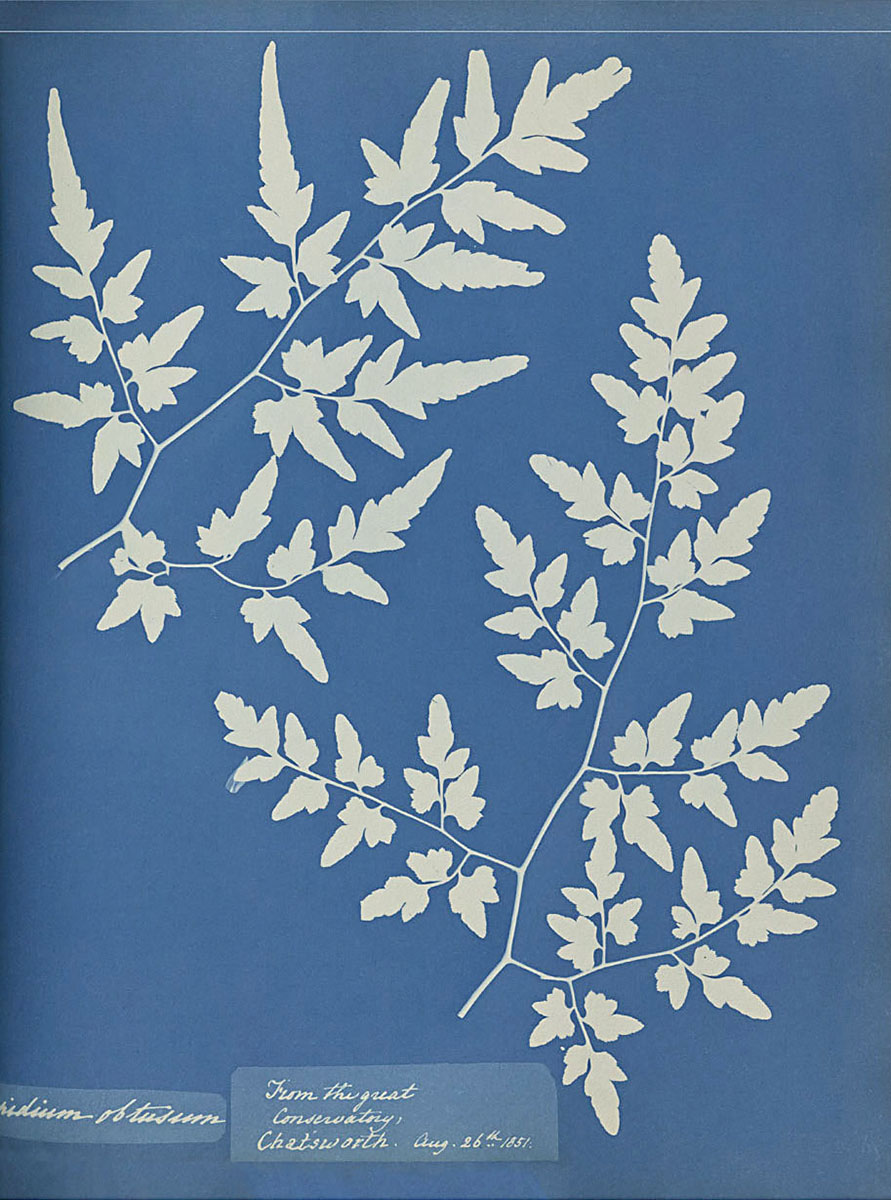
At the time, science was a male-dominated field, unlike botany. Anna Atkins studied plants and illustrated handbooks until she received her first camera in the early 1840s. She devoted her efforts to the cyanotype, a photochemical process that simplified how light impressions were set in monochrome in an unprecedented way, producing Prussian or cyan blue prints. As well as being a revelation for Anna Atkins, this technique was the link that enabled her to combine her interest in botany with her scientific inclinations.
In 1843, she published Photographs of British Algae: Cyanotype Impressions, which is considered to be the first book to be illustrated using photography. Each page of this hand-crafted book was imprinted with a specimen of seaweed displayed directly on paper. The bluish, almost ghostly silhouettes introduced a new dimension to a scientific field that had previously relied solely on hand-drawn illustrations. Thanks to her, they became an artistic language in their own right. Although botanists were enthusiastic about this inventory of species from the start, aesthetes later saw them as a new form of art. This approach remains widespread today, as seen in the work of microscopic photography specialist Spike Walker.
Two centuries later, Atkins’ influence is still evident in the work of contemporary artists fascinated by historical techniques and the interplay between slowness, materials, and the artisanal nature of creative practice. Beyond her role as a photography pioneer, Anna Atkins reminds us that careful observation of nature fuels both science and imagination.
Gallery
VISITOR CENTER
on the forecourt of the Römertherme
Brusattiplatz 3, 2500 Baden bei Wien
Telephone: +43 665 6728 0143
Open until 11 October 2026:
Monday to Friday from 11:00 – 17:00
Saturday and Sunday from 09:00 – 19:00
There you can find out all about the photographers featured in the exhibitions. There is a bookshop and refreshments, artist talks and workshops, festival catalogues and exhibition maps.
Any couple who’d like to find out what their kiss looks like under a microscope can have it photographed in the KISS BOX.
Festival office La Gacilly-Baden Photo
Tel: +43 (0) 2252 42269
festival@lagacilly-baden.photo